


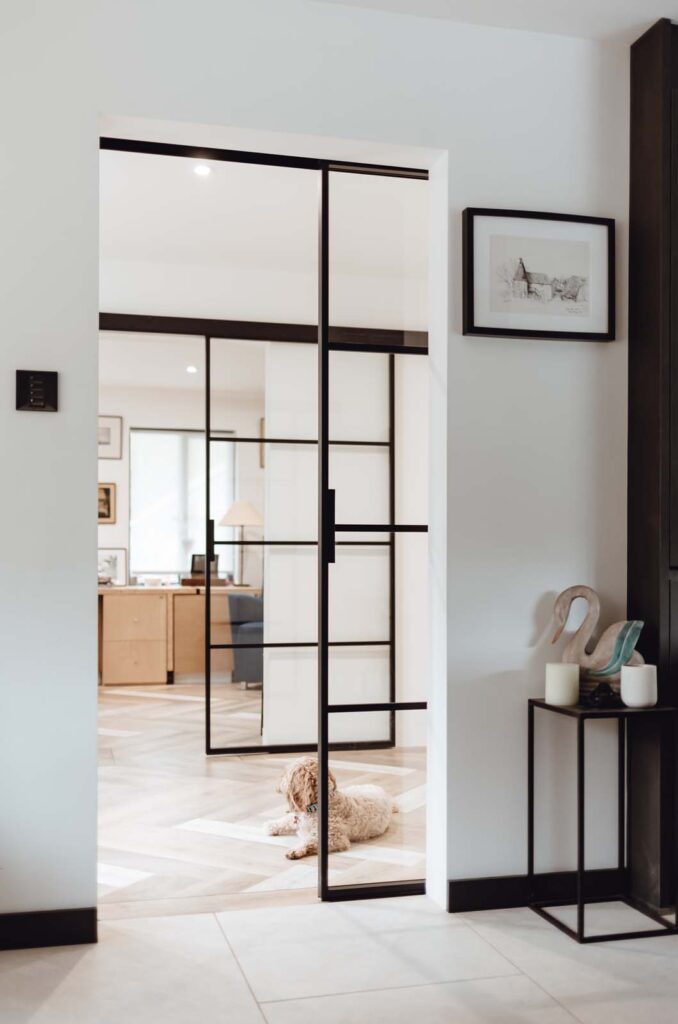
Choosing interior sliding doors is a functional and stylistic commitment. Your decision directly influences a room’s flow, light, and overall atmosphere. While both industrial and minimalist aesthetics offer clean, uncluttered appeal, their philosophies and visual results differ dramatically. One celebrates raw materiality and structural honesty; the other pursues pure form and serene simplicity. Understanding this distinction is crucial, as the wrong choice can create visual dissonance.
Your choice between industrial style and minimalist aesthetics for doors hinges on the narrative you want your space to tell. This is not merely about picking a finish but aligning with a broader design language that affects every architectural detail. The impact of a sliding door goes beyond partitioning space—it can anchor a room’s entire design scheme.
This guide will break down the core tenets of industrial and minimalist design as they apply to interior sliding doors. We’ll examine material choices, hardware details, and integration strategies to help you make a confident, cohesive selection that elevates your home.
Defining the Design Philosophies
To select the right door, you must first understand the underlying principles of each style. They share a modern sensibility but diverge in their expression.
The Essence of Industrial Style
Industrial design draws inspiration from warehouses, factories, and loft conversions. It celebrates the “unfinished” and the utilitarian. The aesthetic values raw materials, exposed structural elements, and a sense of history. Think exposed brick, ductwork, concrete floors, and reclaimed wood. The look is tactile, textured, and often purposefully imperfect. An industrial space tells a story of function and endurance, where beauty is found in the marks of manufacture and use, not in applied ornamentation.
The Core of Minimalist Aesthetics
Minimalism, rooted in movements like Bauhaus and Japanese design, operates on the principle of “less is more.” It seeks to strip away all non-essential elements to achieve clarity, calm, and order. The focus is on form, proportion, and the quality of light and space. Surfaces are smooth and uniform, colors are often monochromatic or neutral, and every object must justify its presence. A minimalist interior aims for visual silence and a sense of expansive serenity, where the architecture itself becomes the art.
Materiality: The Foundation of the Look
Material choices are the most immediate differentiator between these two styles, directly impacting the door’s presence and performance.
Industrial Materials: Raw and Robust
Industrial sliding doors thrive on unadorned, weighty materials. Steel, iron, and aluminum in their raw or minimally finished states are standard. Think blackened steel frames with visible weld marks or matte powder-coated finishes that resist showing wear. Glazing, when used, often features clear or lightly tinted float glass, sometimes with imperfections or a greenish cast. Solid doors may be crafted from heavy, reclaimed timber with visible knots, saw marks, or ironmongery. The goal is authenticity and a sense of permanence.
Minimalist Materials: Refined and Seamless
Minimalist aesthetics demand materials that appear seamless and flawless. The palette is intentionally restrained. Door frames are typically slim and made from brushed aluminum, stainless steel, or painted wood in neutral tones like white, black, or gray. The surfaces are smooth, without texture or visible hardware seams. Glass is a star player, often used in large, clear panels to maximize light transmission and visual continuity. Frosted or satin-finish glass can provide privacy without visual clutter. For solid doors, high-pressure laminates, lacquered wood veneers, or flush-panel designs in uniform colors create a silent, integrated appearance.
Hardware and Functional Details
The mechanics and fittings of a sliding door are integral to its style. In industrial design, they are highlighted; in minimalism, they are concealed.
Industrial Hardware: Function as Feature
Industrial hardware is bold, mechanical, and proudly on display. The sliding mechanism itself is part of the decor. Heavy-duty exposed track systems, often in black or galvanized steel, run along the ceiling or wall. Rollers and hangers are visible and substantial. Barn-door style handles crafted from forged iron, pipe fittings, or leather straps reinforce the utilitarian vibe. The hardware’s purpose is clear, and its robust construction is a visual asset, adding to the honest, workmanlike character of the space. Choosing high-quality Interior Sliding doors with authentic industrial hardware is essential to achieving this look convincingly.
Minimalist Hardware: The Art of Invisibility
Minimalist design seeks to make the door appear to glide with no visible means of support. Hardware is either completely hidden or reduced to an essential, refined sliver. Recessed or discreet top-hung tracks are paramount, often concealed within a ceiling channel or a slim overhead casing. Floor guides are minimal or eliminated. Handles, if present, are integrated as subtle grooves in the door panel or as slim, recessed pulls. The ideal is a door that operates with a quiet, effortless motion, becoming a moving plane within the architecture rather than an obvious appliance.
Integration and Spatial Impact
How the door integrates into your room defines its ultimate success, affecting light, perceived space, and aesthetic cohesion.
Creating an Industrial Vibe
An industrial sliding door should feel like a natural, rugged component of the space. It pairs perfectly with exposed concrete walls, brickwork, and open-plan layouts. The door can act as a room divider that doesn’t hide the room’s structural bones. Its operation should feel substantial and smooth, complementing other metal elements like shelving units or light fixtures. The door can be a focal point, contrasting against softer textures like worn leather or wool rugs, creating a dynamic, layered environment rich in tactile contrast.
Achieving Minimalist Harmony
A minimalist sliding door aims to dissolve boundaries and expand sightlines. Its integration is about creating clean lines and uninterrupted planes. A large glass sliding door can merge a living area with a garden, enhancing the connection to the outdoors. Solid doors in flush, wall-matched finishes can disappear when closed, maintaining an unbroken wall surface. The key is meticulous alignment, flawless installation, and ensuring the door system does not interrupt the flow of light or the serene, orderly rhythm of the space. For this seamless effect, the precision of well-made Internal Sliding doors is non-negotiable.
Making Your Choice: Key Considerations
Your decision should be guided by more than just visual preference. Ask these practical questions.
- What is the architectural context of your home? A converted loft with exposed beams naturally leans industrial. A new-build apartment with clean lines is a minimalist canvas.
- What is your tolerance for maintenance and texture? Industrial finishes can be more forgiving of scratches and patina, while minimalist surfaces often require careful upkeep to maintain their flawless appearance.
- What is the primary goal for the space? If you seek a warm, dynamic, and character-filled room, industrial may suit. If your priority is calm, focus, and a sense of spacious purity, minimalist is the path.
- What is your budget for precision? True minimalist doors, with their hidden tracks and custom finishes, often command a higher installation and fabrication premium than many standard industrial systems.
Frequently Asked Questions
Can I mix industrial and minimalist elements?
It is possible but challenging. The core philosophies conflict. A successful blend typically involves using minimalist as a base—clean walls, neutral palette—and introducing a single, bold industrial element, like a steel-framed sliding door, as a deliberate focal point. The key is restraint and ensuring one style clearly dominates.
Are industrial sliding doors less functional?
No. When properly specified and installed, industrial-style doors are highly functional and durable. Their robust hardware is designed for heavy use. The perception of them being purely aesthetic is incorrect; they are often chosen for their strength and longevity in addition to their look.
Do minimalist doors offer less privacy?
Not necessarily. While they frequently use glass, options like full-height frosted glass, satin finishes, or switchable privacy glass provide ample seclusion. Solid minimalist doors in matching wall materials can also offer complete privacy while maintaining a seamless appearance.
Which style is more cost-effective?
Costs vary widely based on materials and hardware. Authentic reclaimed materials and custom metalwork for industrial doors can be expensive. Conversely, high-end minimalist doors with concealed systems and custom-sized panels also represent a significant investment. Generally, mid-range versions of both are comparably priced, with cost driven more by material quality and installation complexity than by style alone.
How do I ensure my sliding door choice feels cohesive?
Start with one or two other key pieces in your room—a sofa, a lighting fixture, a flooring material. Let the material and color of those pieces inform your door selection. The door should feel like a natural extension of these elements, sharing a common material language or providing a thoughtful contrast.
Can sliding doors work in small spaces?
Absolutely. Both styles are excellent for saving space compared to swinging doors. A minimalist glass door can make a small space feel larger by maximizing light. A solid industrial door can define zones without imposing a permanent, space-hogging wall.
Conclusion
The choice between industrial style and minimalist aesthetics for your interior sliding doors is a defining one. It moves beyond mere trend-following to engage with deeper questions about how you want your space to feel and function. Industrial design offers narrative, texture, and a grounded, dynamic energy. Minimalism provides clarity, tranquility, and a sense of expansive order.
Your final decision should resonate with the architectural truth of your home and your personal vision for daily life within it. By carefully considering materiality, hardware, and integration as outlined here, you can select a sliding door system that is not just a partition but a purposeful and powerful expression of your chosen design language. The right door will serve you beautifully for years, becoming an integral part of your home’s character and flow.