

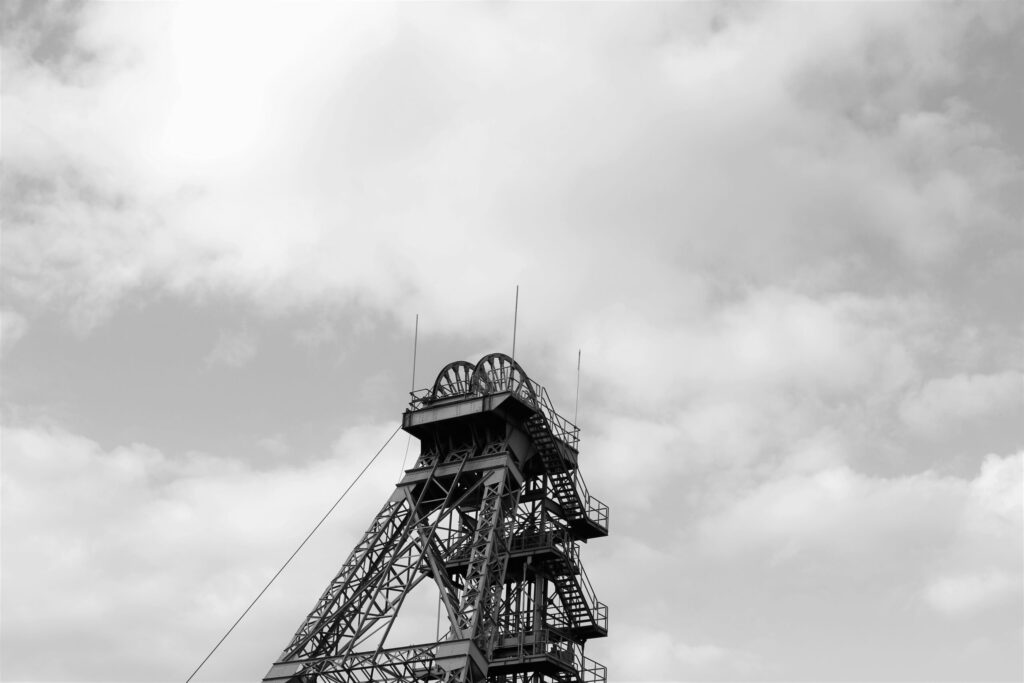
The industrial landscape across North America and Europe is dotted with vacant manufacturing facilities—remnants of economic shifts, automation, and changing trade patterns. These structures, often spanning hundreds of thousands of square feet, represent both a challenge and an opportunity. While municipalities struggle with blight and lost tax revenue, forward-thinking developers see potential in repurposing legacy assets abandoned manufacturing facilities as modern infrastructure. Among the most promising conversions is the transformation of old factories into data centers, facilities that form the backbone of our digital economy.
This shift isn’t merely theoretical. Several successful projects have demonstrated that with proper planning, capital investment, and technical expertise, obsolete industrial buildings can house the servers and networking equipment that power cloud computing, streaming services, and enterprise applications. The question isn’t whether it’s possible, but rather what conditions make such conversions viable and profitable.
The Structural Advantages of Manufacturing Buildings
Former manufacturing plants offer several inherent benefits that align surprisingly well with data center requirements. These facilities were built to accommodate heavy machinery, which means they typically feature reinforced concrete floors capable of supporting substantial weight loads. Modern server racks, uninterruptible power supplies, and cooling equipment can easily fit within weight parameters designed for industrial presses and assembly lines.
High ceilings, another common feature of manufacturing spaces, provide critical advantages for air circulation and cooling system installation. Data centers generate enormous heat, and vertical space allows for efficient hot aisle/cold aisle configurations and overhead cooling infrastructure. Many older factories also include loading docks and wide access points, simplifying the installation of oversized equipment during the conversion phase.
The footprint itself matters. Manufacturing facilities often occupy 50,000 to 500,000 square feet on single-level or low-rise configurations. This horizontal layout reduces the complexity and cost compared to retrofitting multi-story office buildings, where structural modifications and elevator systems complicate conversions.
Power Infrastructure: The Make-or-Break Factor
No element matters more to data center viability than electrical capacity. A typical manufacturing plant might have operated on 1-5 megawatts of power. A modern data center, depending on its scale and density, can require 10-50 megawatts or more. Can an abandoned manufacturing plant be converted into a data center? The answer depends largely on whether the local electrical grid can support massive power upgrades without prohibitively expensive substation construction.
Proximity to transmission lines and available grid capacity varies dramatically by location. Some former industrial zones were deliberately built near power generation facilities, giving them a distinct advantage. Others sit in areas where utility infrastructure has deteriorated or was never robust enough for modern data demands.
Evaluating Grid Connectivity
Before committing capital to a conversion project, developers must secure utility feasibility studies that detail upgrade costs and timelines. In some cases, bringing sufficient power to a site can cost $20-40 million and require 18-24 months of construction. These figures can render otherwise attractive properties financially unworkable.
Redundancy requirements add another layer. Data centers need dual power feeds from separate substations to maintain uptime during outages. Manufacturing plants rarely had this configuration, meaning entirely new electrical pathways may need to be established.
Cooling Systems and Climate Control
Data centers operate within narrow temperature and humidity ranges. Server equipment typically requires ambient temperatures between 64-80°F, with relative humidity controlled between 40-60%. Manufacturing plants, by contrast, were often minimally climate-controlled, especially in heavy industries where heat was a byproduct of production processes.
Retrofitting for precision cooling involves several approaches. Some conversions utilize traditional computer room air conditioning (CRAC) units, while others implement more efficient systems like in-row cooling or liquid cooling for high-density installations. The existing HVAC infrastructure in a manufacturing facility is almost never adequate and usually requires complete replacement.
Geographical location influences cooling strategies significantly. Facilities in cooler climates can leverage free cooling or economizers that use outside air for portions of the year, reducing operational costs by 20-40%. Former automotive plants in Michigan or textile mills in the Pacific Northwest gain natural advantages over facilities in Arizona or Texas, where cooling represents the largest ongoing operational expense.
Zoning, Environmental, and Regulatory Considerations
Industrial zoning generally permits data center operations, but the transition isn’t always straightforward. What is the highest and best use for an abandoned industrial site? This question requires thorough analysis of local regulations, environmental remediation needs, and community impact.
Many abandoned manufacturing sites carry environmental contamination from decades of industrial activity. Phase I and Phase II environmental assessments often reveal soil contamination, groundwater issues, or asbestos in building materials. Remediation costs can range from minimal to project-killing, depending on the severity and regulatory requirements in the jurisdiction.
Noise ordinances present another consideration. While data centers are quieter than most manufacturing operations, cooling systems and backup generators do produce sound. Facilities near residential areas may face restrictions on generator testing schedules or require sound-dampening investments.
Permitting Timelines
Converting an industrial property to a data center typically requires building permits, electrical permits, and potentially special use permits depending on local regulations. In business-friendly jurisdictions, this process might take 3-6 months. In others, particularly those with contentious community relations or complex environmental requirements, permitting can stretch beyond a year.
Financial Viability and Market Demand
The economics of conversion projects depend on acquisition costs, renovation expenses, and local market demand for data center capacity. In markets like Northern Virginia, Chicago, or Phoenix—established data center hubs with strong demand—conversion projects can achieve favorable returns. In secondary markets without existing data center ecosystems, the risk increases substantially.
Construction costs for adaptive reuse typically range from $150-300 per square foot of white space (the actual area housing IT equipment), compared to $400-600 per square foot for ground-up construction. This cost advantage drives interest in conversion projects, but only when power infrastructure and location fundamentals align.
Fiber connectivity represents another critical demand driver. Data centers require multiple fiber paths from different carriers to provide redundancy and competitive pricing for tenants. Former manufacturing sites in isolated industrial parks may lack this connectivity, requiring expensive fiber builds that erode the cost advantages of conversion.
Frequently Asked Questions
What types of manufacturing facilities make the best data center candidates?
Facilities with robust electrical infrastructure, reinforced concrete construction, high ceilings, and proximity to fiber networks offer the strongest conversion potential. Former automotive plants, aerospace manufacturing facilities, and heavy equipment factories often meet these criteria better than light assembly operations.
How long does a typical conversion project take from acquisition to operation?
Timeline varies based on the facility’s condition and required upgrades, but most projects span 18-36 months. This includes due diligence, design, permitting, construction, and commissioning phases. Power infrastructure upgrades often represent the longest lead-time item.
Are there tax incentives for repurposing abandoned industrial properties?
Many jurisdictions offer tax abatements, enterprise zone credits, or brownfield redevelopment incentives to encourage reuse of abandoned industrial sites. These incentives can significantly improve project economics, sometimes reducing effective tax rates for 10-15 years.
What happens to existing building systems during conversion?
Most mechanical, electrical, and plumbing systems require complete replacement. Structural elements and building envelope typically remain, though roof replacements and exterior improvements are common. The goal is preserving the structural shell while installing entirely new operational systems.
Can smaller manufacturing buildings work for data center conversions?
Smaller facilities under 50,000 square feet can serve as edge data centers or colocation facilities, but they face higher per-square-foot conversion costs and may struggle to achieve economies of scale. The sweet spot for conversions typically starts around 100,000 square feet.
What are the ongoing operational costs compared to purpose-built facilities?
Well-executed conversions can achieve operational efficiency comparable to new construction, particularly in power usage effectiveness (PUE) metrics. However, older building envelopes may require more maintenance, and some design compromises can result in slightly higher cooling costs over the facility’s lifetime.
Conclusion
Transforming abandoned manufacturing facilities into data centers represents a pragmatic solution to two contemporary challenges: the growing demand for digital infrastructure and the need to revitalize obsolete industrial properties. Success requires thorough due diligence, particularly regarding power infrastructure, environmental conditions, and market fundamentals. The projects that work best combine favorable physical characteristics with strong location advantages and realistic financial modeling.
As digital transformation accelerates across industries, the demand for data center capacity will continue growing. Repurposing legacy industrial assets offers a faster, often more cost-effective path to meeting this demand compared to ground-up construction. For communities with abandoned manufacturing plants, these conversions can restore tax revenue, create specialized jobs, and signal economic renewal—proving that yesterday’s factories can power tomorrow’s digital economy.